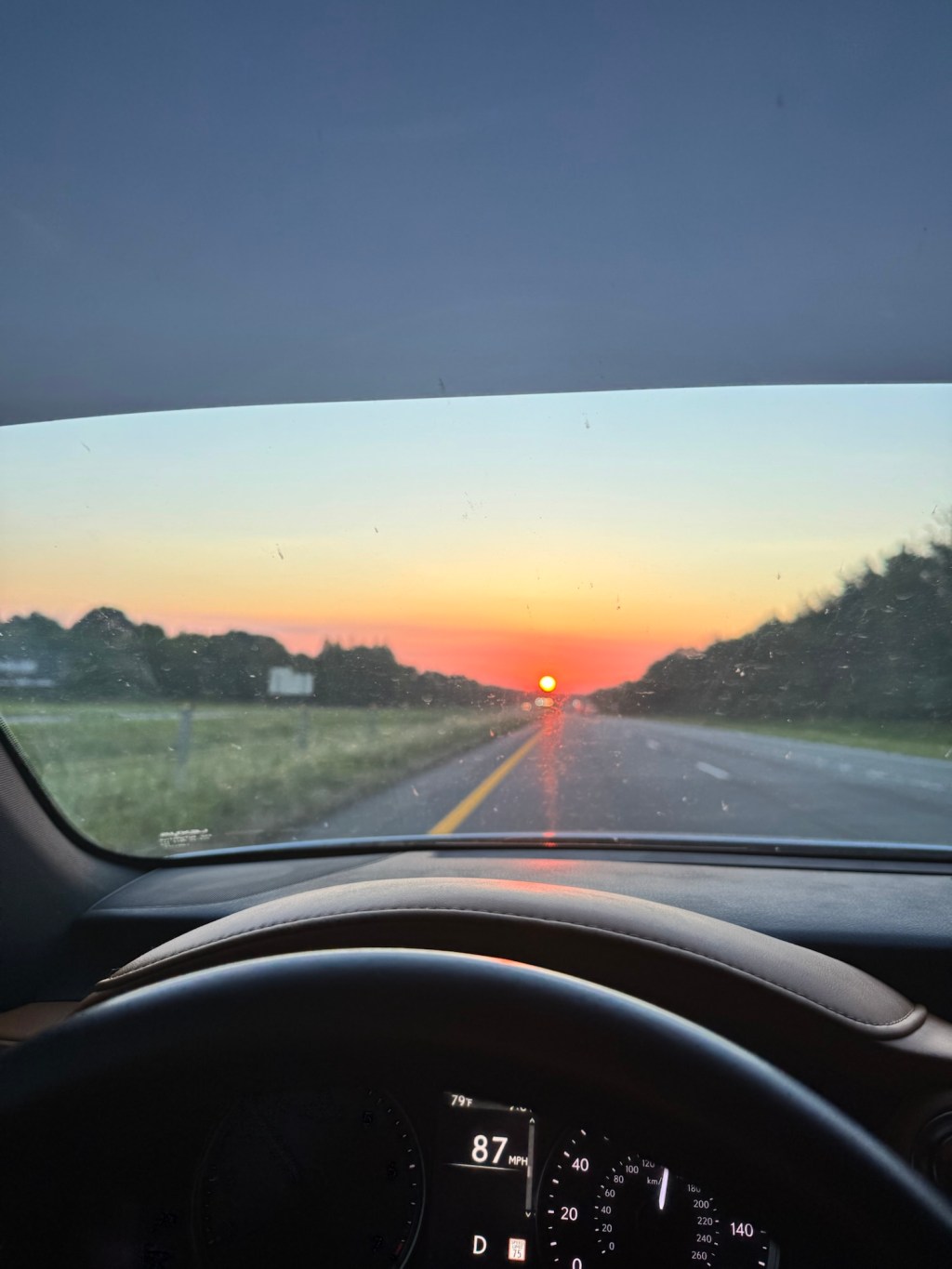
Trust is the foundation of every strong relationship—especially when we choose to love with God at the center. But trust can be difficult, especially after we’ve been hurt. Surrendering control means acknowledging that God’s plan is greater than our own. As Proverbs 3:5-6 says, “Trust in the Lord with all your heart and lean not on your own understanding.” Healing takes time. Psalm 147:3 reminds us, “He heals the brokenhearted and binds up their wounds.”
Even though I’ve been deeply hurt, I once thought I was alone in this pain. But as I opened up, I realized others have walked this road, too. “As iron sharpens iron, so one person sharpens another.” (Proverbs 27:17). In this journey, that having a big heart is not a weakness. I used to think my heart was too big—vulnerable, too easy to hurt. But now I see it as a gift—one God can use to bring healing, hope, and connection.
Be aware of others feelings even as you guard your own heart. The world today is not the same—it’s easy to feel isolated or lost. But when we trust God, we build true hope. As Romans 15:13 says, “May the God of hope fill you with all joy and peace, so that you may overflow with hope by the power of the Holy Spirit.”
There was a time in my life when I lived in survival mode—constantly making sure everything was done, but never really pausing to live in the moment. I thought, “If everything gets better—when this happens, when that happens—then I’ll be happy.”But those days, especially with my children when they were young, slipped through my fingers. Once I realized that, I knew something had to change. I had to let go of waiting for the perfect moment. Instead, I began to live fully in the present—savoring small moments, practicing gratitude, and trusting God in each step.
As Paul says in Philippians 4:11-12, “I have learned to be content whatever the circumstances. I know what it is to be in need, and I know what it is to have plenty. I have learned the secret of being content in any and every situation.” That verse reminds me that peace doesn’t come from perfect circumstances—but from trusting God, right where I am.
God does give us free will, and that’s a powerful gift. But it means we have a choice —we can keep waiting or step forward now, even if uncertain. Change is scary, and growth is painful, but God can transform us in an instant. He’s healing me—my heart, my mind, even my nervous system from survival mode. So now, I stay open, present, and ready to walk wherever He leads me.
I no longer live in the “what ifs.” Instead, I live fully in the now, trusting God with each step. As Proverbs 3:5-6 says, “Trust in the Lord with all your heart and lean not on your own understanding. In all your ways submit to Him, and He will make your paths straight.”
I hope, through sharing this, you’ll be encouraged too—to leave behind the uncertainty and live fully today, trusting God for tomorrow.
We all want companionship. It’s a natural desire—to be seen, known, and loved. But the real question isn’t if we want connection…..it’s at what cost?
I’ve had opportunities to go out with people but I’ve learned I’m not someone who can casually date just to pass time. I don’t want to give someone the wrong impression or lead them to believe I want something more when I don’t. That wouldn’t be fair to them—or to myself.
This is where stewardship comes in.
Stewardship isn’t just about money. It’s about how we care for our time, our hearts, our energy, and our purpose. It’s about being intentional with what God has entrusted to us—including relationships. When we treat connection casually , we often end up carrying emotional weight that was never meant for us to hold.
Companionship should never come at the cost of our peace, our values, or our obedience to God.
I’ve realized that being alone for a season is not a punishment—it’s protection. It’s space for healing. It’s room for growth. And it’s an opportunity to deepen my walk with God with distraction. Loneliness may knock, but I refuse to answer it with compromise. I have stumbled in this at times, but it’s truly the desire of my heart.
There’s a difference between being open and being available.
There’s a difference between companionship and convenience.
I’m choosing to steward my heart well. I’m choosing clarity over comfort, obedience over options, and peace over pressure. I don’t want temporary connection that costs me long-term wholeness.
Because the right companionship will never require me to abandon myself—or my faith—to belong.
“Above all else, guard your heart, for everything you do flows from it.” —Proverbs 4:23
Life often takes us on unexpected journeys, and sometimes those journeys include profound challenges. For me, one of the most difficult periods was navigating divorce, a time that tested my faith and resilience.
Embracing Faith Admist Adversity:
During those challenging times, I found that my relationship with God was my anchor. It was through faith that I discovered a source of strength beyond my own understanding. Even in moments of profound loss, I learned that God makes beauty from ashes, transforming pain into growth and resilience.
Isaiah 61:3- and provide for those who grieve in Zion-to bestow on them a crown of beauty instead of ashes, the oil of joy instead of mourning, and a garmet of praise instead of a spirit of despair. They will be called oaks of righteousness, a planting of the Lord for the display of his splendor.
The Power of Discernment and Hope:
As I moved through each day, sometimes hour by hour, I had to constantly check in and ask which voice was I listening to. God’s voice brought clarity, peace, and comfort, while confusion and anxiety were not from Him. This discernment helped me navigate the journey with greater clarity and faith.
Embracing Growth and Renewal:
Through it all, I’ve come to understand that every challenge is an opportunity for growth. My faith has not only helped me heal but has also empowered me to be a source of strength for my children and others. As we continue forward, let us hold fast to hope, faith, and the assurance that God’s purpose is always at work.
Faith is like a muscle. If you don’t use it, you lose it. And no one can do the work for you.
I go to the gym with a trainer, and her presence motivates me. She encourages me, pushes me, believes I can do more than I think I can. But no matter how great my trainer is, she can’t lift the weights for me. I still have to do the work.
Faith works the same way.
Friends and community can motivate your faith. They can pray for you, encourage you, even believe for you when your faith feels weak. Scripture tells us, “Therefore encourage one another and build each other up”(1 Thessalonians 5:11). But encouragement doesn’t replace responsibility. “Each of us will give account of ourselves to God”(Romans 14:12).
Our walk with Jesus is personal. Just like strength in the gym requires effort, faith requires action. “Faith by itself, if it is not accompanied by action is dead”(James 2:17). We have to show up, trust God, and take steps of obedience—especially when it’s uncomfortable.
Spiritual growth doesn’t happen by accident. Scripture reminds us to “work out our salvation with fear and trembling”(Philippians 2:12). That doesn’t mean earning grace—it means actively choosing trust, surrender, and obedience in our daily lives.
Others can walk beside us, cheer us on, and support us—but they can’t do the work for us. Faith is personal. Our trust in Jesus is built one choice at a time.
Do you ever struggle with doing the “right thing”? I find myself at a crossroads, constantly trying to do the right thing. It’s a journey filled with challenges, moments of self-doubt, and occasional embarrassment. Yet, it’s also a path of immense growth and self discovery.
The Journey of Conviction
In those moments of conviction, when we realize our missteps, we are invited to reflect and grow. It’s not just about feeling guilt; it’s about embracing the opportunity to become better, stronger, and more aligned with our values.
As we navigate this journey, we are guided by timeless wisdom. Micah 6:8 reminds us:
“ He has shown you, O mortal, what is good. And what does the Lord require of you? To act justly and to love mercy and walk humbly with your God.”
This scripture underscores the importance of justice, mercy, and humility in our pursuits.
Ultimately, the journey of doing the right thing is about progress, not perfection. It’s about forgiving ourselves, learning from our experiences, and moving forward with an open heart.
Prayer
Dear Heavenly Father,
Search my heart and reveal anything that is not of You.
Convict me where I need to change, and give me the courage to respond in obedience.
Let Your correction lead me closer to You, not away from You.
Create in me a clean heart and guide my steps in truth. -AMEN
There’s a quiet struggle that happens when we want God’s direction but still hold tightly to our own understanding. We pray for clarity, yet hesitate when the answer requires change. We ask for healing, but cling to what feels familiar—even when it’s the very thing that hurt us. This is the space of being double-minded.
Scripture reminds us, “A double-minded person is unstable in all their ways” (James 1:8). Not because God is withholding, but because a divided heart can’t fully rest. When our trust is split between faith and fear, obedience and comfort, we feel the tension in our spirit.
I’ve had to admit that I’ve been my own worst enemy in this—wanting God’s direction while resisting the surrender it requires. Caught between faith and fear, clarity and comfort, I delayed healing by holding on longer than I should have.
Single-minded faith doesn’t mean we never question—it means we choose where we place our trust. It’s deciding to anchor ourselves in God’s truth even when emotions pull us in different directions. Healing begins when we stop living torn between what we know God is asking and what we’re afraid to release.
Peace comes when we surrender the tug-of-war and let God lead fully—not halfway, not conditionally, but wholeheartedly.
Reflection Question
Where in my life am I asking God to lead while still holding on to control?
Prayer
God, reveal the places where my heart is divided. Give me the courage to release what I’ve been gripping and the faith to trust You fully. Align my heart with Your will and lead me in steady, unwavering faith. Amen.
As a new year approaches there’s often a quiet invitation to pause and reflect—on where we’ve been, what we’ve carried, and who we are becoming. The start of a new year isn’t just about setting goals; it’s about gaining clarity. It’s about stepping into a fresh season with a renewed perspective of who you are, what you want your life to look like, and allowing God to lead you forward.
But before we can fully embrace what’s ahead, we often have to loosen our grip on what’s behind us.
Isaiah 43:18
“Forget the former things, do not dwell on the past.”
The Weight of “What Ifs”
The “what ifs” of life can be heavy. What if the relationship had worked? What if I had stayed? What if I had left sooner?
These questions can quietly keep us stuck—replaying moments we can’t change and outcomes we’ll never fully understand. While reflection can be healthy, living in the past can prevent us from stepping into the future God is preparing us for.
At some point, the “what ifs” stop being questions and start becoming chains.
Learning to Let Go of What We Can’t Control
Letting go doesn’t mean dismissing the pain or pretending the past didn’t matter. It means recognizing that some things are no longer ours to carry. We aren’t meant to have control over every outcome, every relationship, or every chapter that ends.
There’s freedom in surrender—freedom that comes when we say, “God I trust you even when I dont understand.”
A New Year, A New Perspective
Going into a new year with goals isn’t just about what you want to accomplish—it’s about who you want to become. It’s choosing to move with intention, wisdom, and faith. It’s allowing God to shape your path instead of clinging to what feels familiar.
New season requires new vision. And sometimes, new vision requires releasing the old one.
Philippians 3:13-14
“Brothers and sisters, I do not consider myself yet to have taken hold of it. But one things I do: Forgetting what is behind and straining toward what is ahead, I press on toward the goal to win the prize for which God has called me heavenward in Christ Jesus.”
Whatever you may be struggling with, when you consciously seek God’s guidance, He will bless you with more than money can buy: peace in the midst of storms, comfort in times of pain, joy in moments of sorrow, and direction through life’s trials. He will light your path and lead the way.
Psalm 119:105
“Your word is a lamp to my feet and a light to my path.”
Healing is often something we pray for, hope for, and wait on—but over the last ten years has reminded me that we also participate in it. We play a part in our own healing, and that role requires intention, courage, and honesty. Healing doesn’t happen by accident, and it doesn’t come simply with the passing of time. Time may soften the edges of pain, but it is what we choose to do within that time that shapes true restoration.
God is our healer, but He often invites us into the process rather than removing us from it. There is a partnership between divine grace and personal responsibility. Prayer matters deeply—but so do the steps we take when God reveals what needs to change. Healing begins when we stop avoiding the pain and start acknowledging it.
Playing a part in our healing means showing up for ourselves even when it’s uncomfortable. It means naming what hurt us instead of minimizing it. It means recognizing patterns that no longer serve us and having the courage to choose differently. Healing asks us to stop waiting for apologies we may never receive and to stop placing our peace in the hands of people who may not know how to protect it.
There is humility in admitting our need for God, and there is obedience in responding to what He asks of us. Sometimes healing looks like prayer and surrender. Other times it looks like boundaries, rest, or walking away. Sometimes it looks like forgiveness, and other times it looks like allowing ourselves to grieve what was lost. Each step matters. Each choice carries weight.
We play a part in our own healing when we choose not to remain stuck, when we allow God to renew our minds and soften our hearts, and when we trust that tending to our wounds is not a lack of faith but an expression of it. Healing is not instant, and it is rarely linear—but when we partner with God and take responsibility for our growth, restoration becomes not only possible, but purposeful.
One practice that has gently reshaped my days is learning to look for what I call “God winks.” They aren’t always loud or dramatic—most of the time, they’re quiet, almost easy to miss. A timely text, a song that speaks directly to my heart, a stranger’s kindness, or a moment of peace that doesn’t quite make sense. These small reminders show me that God is present, attentive, and walking with me even in the ordinary. When life feels heavy or uncertain, looking for God winks helps me slow down, shift my focus, and recognize that He is still working—often in ways I didn’t expect, but always in ways I need.
New Connections in a Season of Healing
New connections have been very important in my life this year, especially in a season where healing required me to let go of what once felt familiar. Letting go wasn’t easy—it meant releasing relationships, expectations, and versions of life I thought would last forever. But in the space that followed, God began to place new people in my path. These connections didn’t replace what was lost; they supported what was healing. They reminded me that growth often comes after surrender, and that God is faithful to meet us in the empty spaces we’re afraid to face.
Each new connection felt like a quiet God wink—evidence that letting go isn’t the end of the story, but the beginning of something restored.
Scripture Reflection
“See, I am doing a new thing! Now it springs up; do you not perceive it?”
— Isaiah 43:19
This verse reminds me that God often brings renewal not by returning us to what was, but by gently leading us into what’s next—inviting us to trust Him even when the path feels unfamiliar.
Closing Prayer
God, thank You for meeting me in the spaces where I’ve had to let go. Thank You for the healing You bring, even when it feels slow and uncertain. Help me trust You with what I release and remain open to the new connections You place in my life. Teach me to recognize Your presence in the small moments, the God winks that remind me I am never alone. Continue to restore what has been wounded, and guide me forward with grace, courage, and hope.